Thursday, May 31, 2012
Annual Advocacy Day for Children and Adolescents
On May 11th, the American Academy of Child and Adolescent Psychiatry (AACAP) hosted more than 200 child and adolescent psychiatrists and family members affected by mental illness for its annual Advocacy Day in Washington, DC. The event brought together physicians, parents of children with mental illness, and youth advocates to promote children’s mental health issues on Capitol Hill.
Wendy Fayles, NAMI Utah Programs Director, took part in the event, meeting with the staff from the offices of Senator Orrin Hatch, Senator Mike Lee, Representative Jim Matheson and Representative Jason Chaffetz to address issues related to access to child mental health services, the shortage of child mental health specialists in our community, and funding for children’s mental health programs.
“The thing that impacted me the most,” Wendy noted, “was the map showing the shortages of child and adolescent psychiatrists in Utah (map). I have talked to a number of parents whose children are on waiting lists several months long to see a psychiatrist. After looking at the map, I understand why. One of the things we asked our legislators to do was support funding for pediatric mental health loan repayment in this year’s appropriations, which would encourage more physicians to choose child psychiatry—a specialty that requires an extra two years of training and as much as $150k in additional student loan debt.”
To learn more about mental health statistics affecting Utah’s youth, click on the attached link.
Monday, April 23, 2012
Open Your Mind, Open Your Heart
On Thursday May 17, 2012 NAMI Utah will host an Open House fundraiser. The event will feature a silent auction, food, music, and an official ribbon-cutting ceremony with honored guests Ann Cannon, Julie de Azevedo Hanks, and members of the Salt Lake Police Department with NAMI Executive Director, Rebecca Glathar.
Join us as we celebrate help, hope and healing and open minds to recovery and resiliency. With live music from world-renown classical guitarist, Michael Lucarelli, guest speakers including Olympic snowboarder Graham Watanabe and critically acclaimed blogger Heather Armstrong, food and beverage from Culinary Crafts and Tin Angel CafĂ©, desserts from Ye Olde Cupcake Shoppe, a silent auction, and fabulous art donated by professional artists across the state of Utah, this will be an evening you won’t want to miss!
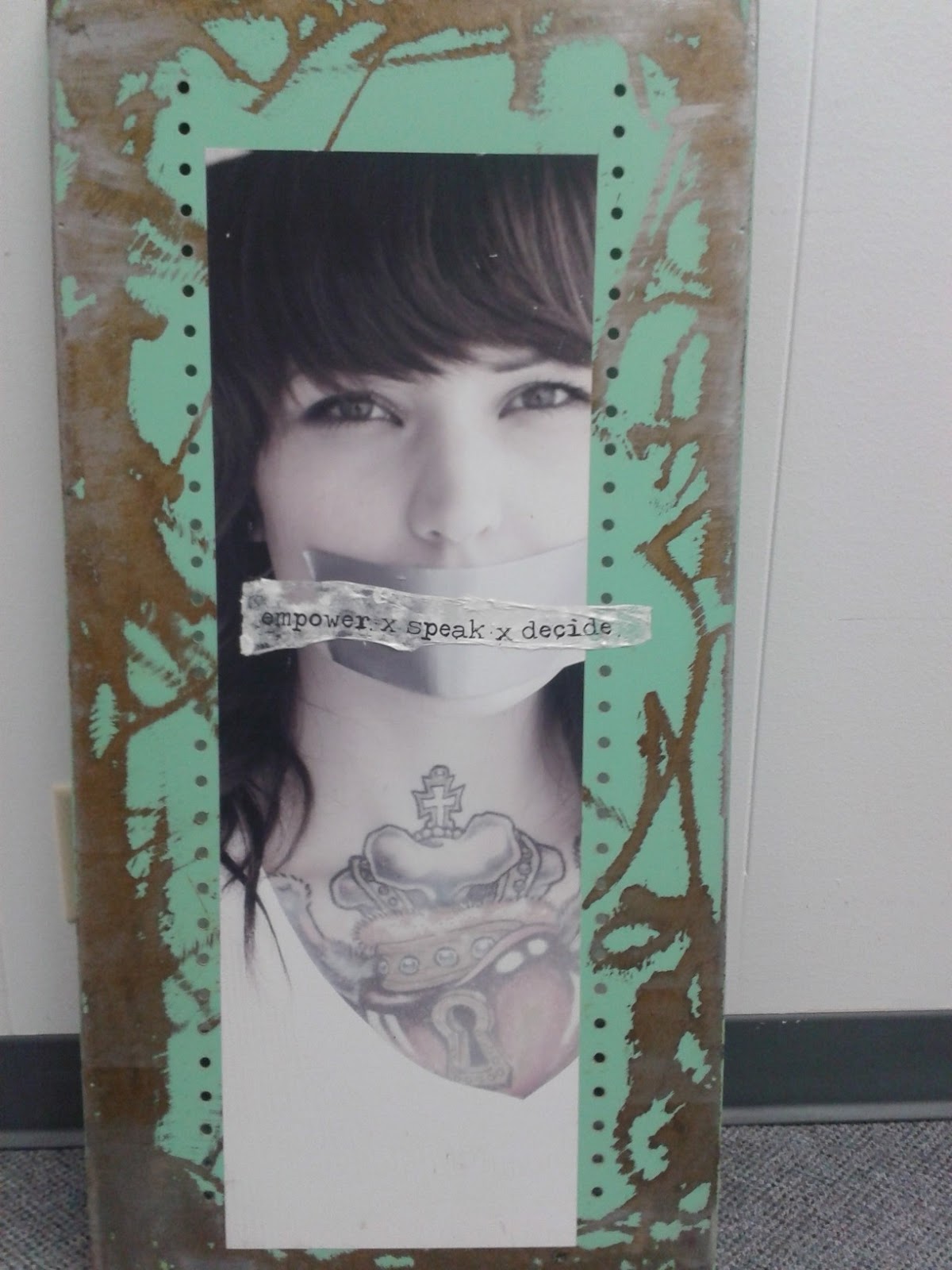
We have some great pieces of art already coming in to our office for the art auction! Check them out and be sure to bid on May 17th!
Join us as we celebrate help, hope and healing and open minds to recovery and resiliency. With live music from world-renown classical guitarist, Michael Lucarelli, guest speakers including Olympic snowboarder Graham Watanabe and critically acclaimed blogger Heather Armstrong, food and beverage from Culinary Crafts and Tin Angel CafĂ©, desserts from Ye Olde Cupcake Shoppe, a silent auction, and fabulous art donated by professional artists across the state of Utah, this will be an evening you won’t want to miss!
We have some great pieces of art already coming in to our office for the art auction! Check them out and be sure to bid on May 17th!
![]() |
| Morag Totten |
| Preston Wood |
| Cat Palmer |
| Jane Wright |
Wednesday, March 14, 2012
NAMI Utah Says Good Bye and Good Luck to Staff Member, Liz Felt
One of NAMI Utah’s
amazing mental health champions and mentors, Liz Felt, is leaving us for a new
position with UNI’s Mobile Crisis Team.
Liz first became involved
with NAMI when she was asked by a friend to speak to her Family-to-Family class
about her experience with mental illness. Liz fell in love with the support and
empathy the class members provided for each other and their family members. She
took BRIDGES, loved it, and began volunteering by teaching BRIDGES in the Salt
Lake County Jail. Liz was soon hired by NAMI Utah as a Consumer Mentor and held
that position for six years! She co-facilitated the Utah Mental Heath Recovery
Network (our consumer council), taught in the Salt Lake County Jail, she has
overseen the Artists’ Project and supported artists thriving in the art
community, was a huge advocate and supporter of NAMI (and still will be I'm
sure!!) and served as a mentor on Valley Mental Health’s Jail Diversion
Outreach Team.
While we will surely miss
her here at NAMI, we know that Liz will continue to do fantastic work as part
of the crisis team at UNI. We couldn’t be more excited for her new position, or
sadder that she will no longer grace our office with her wonderful energy and
positive attitude! We love you Liz!!
Tuesday, March 13, 2012
Valley Mental Health Expands Services
Release from Valley Mental Health:
SALT LAKE CITY, Mar. 13, 2012 –
Valley Mental Health, Inc., a private, non-profit organization providing and
promoting accessible, quality behavioral and physical health care, has expanded
its service offerings by launching assertive community-based outreach teams.
Serving adults and children, these teams bring mental health and substance
abuse services directly to people in need – no matter where they are.
“Assertive, community-based
outreach teams are a return to Valley’s past, as well as an example of how we
will grow in the future,” said Gary Larcenaire, president and CEO of Valley
Mental Health. “These teams allow us to meet the needs of the people we are
entrusted to serve in their own communities.”
With the client as the center of
the team, the adult Assertive Outreach Team is designed to promote clients’
growth and recovery, while enhancing their personal, family and community life.
Together the clients and team work to reduce barriers, facilitate access, and
increase the knowledge and skills necessary to obtain individual desired
outcomes and aspirations.
The children’s i-WRAP Team
(intensive wrap-around services) strives to reduce the frequency and duration
of acute and long-term hospitalizations, residential placements and higher
levels of care, while improving the quality of life of children and their
families.
Based in the community, the teams
consist of medical staff, social workers, therapists, case managers, family
advocates and peer specialists. They will use assessments, questionnaires,
surveys and other quantifiable methods to measure outcomes.
About Valley Mental Health
Valley
Mental Health is a not-for-profit organization that serves Salt Lake, Summit
and Tooele counties. Since 1987, we have provided comprehensive treatment and
services for people of all ages who are experiencing serious mental illnesses,
substance use disorders and behavior problems. We believe people are
best served in the least restrictive setting where care is tailored to the
individual's needs, with families and community partners playing an important
role in a person's recovery. For more information please see www.vmh.com.
Monday, February 27, 2012
NAMI Utah is Moving!
Beginning March 9, 2012 our new address is:
1600 West 2200 South Suite 201
West Valley City, UT 84119
Wednesday, February 15, 2012
What Would Happen if you Had to Jump Through Hoops to Get the Mental Health Medication that Works for you?
NAMI Utah has taken an opposing stance on Senate Bill 85. SB 85 is a bill that will put mental health drugs on the Medicaid Preferred Drug List. You can read the bill in it's entirety here.
Some history on the bill: In 2007, the Utah Medicaid Program implemented a "Preferred Drug List" which included an exemption for psychotropic or antipsychotic drugs. NAMI Utah has been involved with this discussion to maintain the exemption for medications used to treat mental illness for many years now. This exemption is critical in keeping those who live with mental illness healthy and productive.
NAMI takes an opposing position to this bill because treatment does work
if people can access it. Having access to the medications this
vulnerable population needs based on their physician's best clinical
judgement can make all the difference in the outcomes for people and in
helping them live full and productive lives in the community.
You cannot simply look at pharmacy costs in treating mental illness. It
costs the state $3,200 to maintain someone with serious mental illness
in the community. It costs the same amount to hospitalize someone for
three days. That can be just one medication change. Individuals living
with serious mental illness have complex conditions that require
individualized treatment. Adding a level of bureaucracy to the process
of accessing medications will be a deterrent to individuals complying.
It is important to note that two very expensive (and effective)
psychotropics have gone generic this year (Zyprexa, Seroquel). This is
significant because this shows how the market takes care of itself to
regulate these medications, and their costs.
Talking points to use in your conversation to your Senator:
1.) Mental illness and the medications for treatment
can be very complicated. Missed doses, discontinuation, or changes in
doses or specific medication can result in serious relapses which can result in
devastating consequences for individuals, families and our communities.
2.) Prescribers must be able to use their best
clinical judgment when prescribing psychotropic medications. With mental
illness, people often have to try many medications and different combinations
to find relief of their symptoms and to move on to recovery.
3.) Because compliance is critical for treatment
success, side effects can be very serious, and there is not a “one-size-fits
all” solution, medications for mental illness should remain exempt from the
Preferred Drug List.
Please write to your legislators and tell them to oppose SB 85. Need help finding your legislator? Click here to search by your district.
Labels:
Medicaid Preferred Drug List,
mental health,
NAMI Utah,
SB 85,
Utah
Thursday, February 2, 2012
For Parents of Children with Bipolar Disorder
Andy Hogan is a guest blogger for NAMI Utah. These thoughts are his and his alone. Here is his story:
“…It’s like you’re
drowning right in front of me, and I’m reaching out but you can’t see,
There’s something holding
on to you so tight, so I guess this is all I’ll say to you tonight: If you ever need me, you
know where to find me, I will be waiting, where I’ve always been…right by your side.” -Matthew West
I love the message of this
song. It describes well an emotion that so many parents experience as they
watch their child battle bipolar disorder. When I say “child” I mean child of
all ages. Parents are parents no matter how old their children get. Almost all
parents love their children deeply and it rips their hearts apart to see a
child suffer all the emotional, spiritual, and physical agony that depression
and mania can cause.
My parents are no
exception. Growing up I had symptoms of depression and mania, but no one suspected
they could become as extreme as they did. At 19 I went to Taiwan on a volunteer
mission for my church. My assignment was for around 24 months. However, after just
ten months, my parents received a phone call I’m sure they will never forget.
The phone conversation
went something like this, “Your son is experiencing some kind of psychotic
breakdown. He can’t respond to simple questions. He has been restrained in a
church house. Sometimes he screams out, or bursts into hysterical laughter
followed by crying like a baby. This and other very bizarre behavior has gone
on for several hours. He even bit another missionary on the leg. Can you tell
me what is happening and what we should do?”
I can’t imagine the
anguish my parents suffered during that time in my life. I think any parent
that receives this type of news suffers similarly. My parents had a small understanding
of what was happening because my mother had been diagnosed with mental illness
years before. She too had suffered a mental break breakdown. It’s hard to say
if this personal understanding was helpful or hurtful though because my parents
knew all-too-well the anguish I was suffering, and they also knew this was only
the first explosion of a lifelong war.
Under the direction of my
parents, my leader along with some other missionaries in Taiwan took me to a
hospital where sedative injects were the only option to gain control. So much
medication was needed to put me under that I didn’t consciously wake up for a
whole week. When I finally “came to,” I found myself back in the USA locked in
the psychiatric ward of a hospital. My parents made a two hour drive every day
to see me during visiting hours.
As I tried to figure out
just what happened to me and how I should deal with it, my first reaction was
to throw blame at my parents for things they had said and done while raising me.
As I cried and criticized them during our therapy sessions they were very
loving and willing to try and correct things from our past. I’m sure they knew
that my problem was more “nature” and less “nurture” (meaning the chemistry in
head was the main cause of my bipolar disorder, not the way they raised me) but
they were willing to try and help in any way they could, even if it meant me
pointing my finger at them, all the while not being willing to admit, in even
the smallest way, that any of my attitudes or personality traits needed to be
corrected as well.
How much love does it take
for parents to willingly take verbal lashings of criticism and blame for a
life-shattering breakdown when they know they weren’t the reason for it? As
they say in Chinese: A great big pile of love. Looking back at it now, 20 years
later, I can see the love my parents showed me was similar to another great and
loving Person who lived a perfect life, but willingly suffered the pain of
every person, just hoping that by doing so some of us wouldn’t have to hurt so
much.
The issues of my past with
my parents were important to address and talk about. I’m sure my parents would
be the first to admit that imperfections in their parenting cast loops and
knots into the attitudes and thought processes I reeled in during my childhood
and teenage years. Add to the snarl the fact that during that time, my mother was
also fishing for understanding of mental illness with many of the same kinks
and twists in her own line, and you get a very tangled mesh of influences. I’m
pretty good at untangling messed-up fishing lines, but sometimes the best way
to fix the problem is to simply cut the line, discard the tangles, and restart
with the line you have remaining in your reel. Sadly, at that point in my life I focused only
on the tangles and didn’t appreciate or even acknowledge that at the end of my
parents’ line was a golden hook of love stuck in the belt loop of my waist that
lifted me up and saved me from drowning again and again.
After a month in the
hospital I was reassigned to Montana to continue my volunteer mission. There,
after just three months, I quit taking my medication and suffered another
breakdown even more severe than the first one. Once again, my parents got the frantic
phone call. Living in a neighboring state, Mother and Dad were able to get a
quick flight to Bozeman. Arriving at the psychiatric ward, the staff of the
Bozeman hospital informed them I had been given sedative injections to stop the
psychotic madness. The nurse led them to the padded, locked holding cell where
I was asleep on a thin mat on the floor.
When I awoke, the
psychosis had cycled to depression. This meant I was sane, but very down and extremely
anxious in mind and body. When the hospital told my parents they wouldn’t allow
my release until the next day, my loving father couldn’t stand the thought of
me in the cell alone all night. So he came in and spent what felt like an
eternal night with me locked inside the padded room. More injections through
the night forced me to sleep, but interrupted what little sleep Dad had. I slept
on the mat and he tossed and turned on the cold, tile floor. Although I was
drugged and loopy, blue as toilet water, confused, cold and stripped of any
dignity, the love my father showed me that night touched my heart in a way I
had never felt before.
The next day, my parents flew
with me back to my home state. Straight from the airport, they immediately
drove me to a local clinic for behavioral medicine. As they started filling out
the paperwork to check me in, my mother asked the director what their program
was like. The director described a program with strict enforcement of curfews,
early morning rising, and busy, intense therapy. Feeling like I was being
checked into a boot camp, fear caused my body to tremble and shake. I knew I
had no say in whether or not the clinic was for me. I’ll never forget the
relief and gratitude I felt when my mother lovingly looked at me, tore up the
registration papers and said, “Andy doesn’t need this. Let’s go home.” The night with my dad and the understanding of
my mother sparked warmth in my heart that began the thaw of my ice-hard
stubbornness.
Choosing to bring me home
did not make life for my parents easier. Rather, it was “the hard way.” Although
a trickle of refined, clean humility had started to clear my eyes and allow me to
see glimpses of my parents’ love for me, in my brain, bipolar disorder was now
a raging, roaring, full-blown flash flood. To someone observing my manic
depressive storm from a distance, the love my parents showed me during that
tumultuous time would seem as obvious as a giant rainbow gleaming through the
pouring rain. But through the following weeks, months, and even years, I kept
my eyes focused mostly on the muddy memories of manic yesterdays, and my hands
grasping for a sandy future that the bipolar flood had washed away. Choosing to
swim my bipolar flood alone and face down in the cyclone waters of denial, ignorance,
and confusion, my parents could only watch as my life continued to spiral lower
and lower. When the inevitable crush of rock bottom forced me to admit I needed
help and to realize I couldn’t get back afloat alone, guess who was there to mop
up my tears, take me by the hand, and lovingly start lifting me back up? Of
course, it was the ones who had been there all along; my parents.
In conclusion, I’d like to
offer this to my parents and all parents of children with bipolar disorder or
any other mental illness. Thank you can’t be said enough times for your love,
patience, and care. For too many years the pain and confusion of my own
suffering blinded me to yours. You suffered as much or more than I did! But you
never despaired nor abandoned me, and when I finally looked inward to find the
problem and outward for help, instead of the other way around, I finally saw
and appreciated that your love was a precious gift that I had been taking for
granted. Now I know you are the unsung heroes of my bipolar war; the ones who
had and continue to have my back in every battle. Thank you. Thank you.
To those parents whose
children are still so blinded by the pain and confusion of their bipolar
battles that they don’t see how much you suffer in their behalf, won’t hear the
healing words you offer, and can’t appreciate or even feel the love you carry
for them, I just want to say, thank you for caring and thank you for continuing
to try. I believe as long as you don’t give up, your children will always have
hope. Keep trying, keep praying, and continue on where you’ve always been…right
by their sides.
Andy Hogan
Andy has a “Bipolar Blog”
at www.bearcanyonpress.com
Contact Andy: info@bearcanyonpress.com
Labels:
bipolar disorder,
mental health,
NAMI,
NAMI Utah,
parents
Monday, January 30, 2012
Mental Health Matters!
For the rest of the day, NAMI Utah staff, supporters, and individuals who believe that mental health matters, will be on Capitol Hill waiting and ready to speak with legislators about the important public policy issues that affect mental health. (We will be discussing these in a future post so you can become familiar with the issues.)
If you would like to come for the breakfast and workshop, you must RSVP to Amber (amber@namiut.org or 801-323-9900) as space is limited.
Join us on the Hill as we let our legislators know that Mental Health Matters!
Friday, January 20, 2012
Clinical Trials
Have you ever thought about participating in a mental health clinical trial? The National Institute on Mental Health (NIMH) developed a guide for individuals interested in participating in clinical trials. The guide answers common questions you may have about clinical trials and research, including:
Why participate in clinical trials?
People participate in research for several reasons Some hope to get the most advanced treatment available for mental and behavioral illnesses Others participate because they want to assist scientists in developing better ways to help people.
Research is our best hope for understanding and treating mental illnesses Thanks to help from volunteers, medical researchers are learning more and more about the causes of mental and behavioral disorders, and are finding new ways to treat and prevent illnesses Without this important relationship between research participants and those studying their illnesses, it would be much more difficult to improve health treatments.
Click HERE to download the guide and discuss with your family and friends who can help you make the decision regarding participation. If you decide to participate in a clinical trial, click HERE to see what trials are taking place in your area and how to get involved.
Subscribe to:
Posts (Atom)